
Why it is so important to check and train your senses when we’re getting older
Mary Mac Gillavry | MAR 30, 2025
maintaining health
sensory threshold
how senses change with age
hearing loss
vision decline
sensory health tips
Why it is so important to check and train your senses when we’re getting older
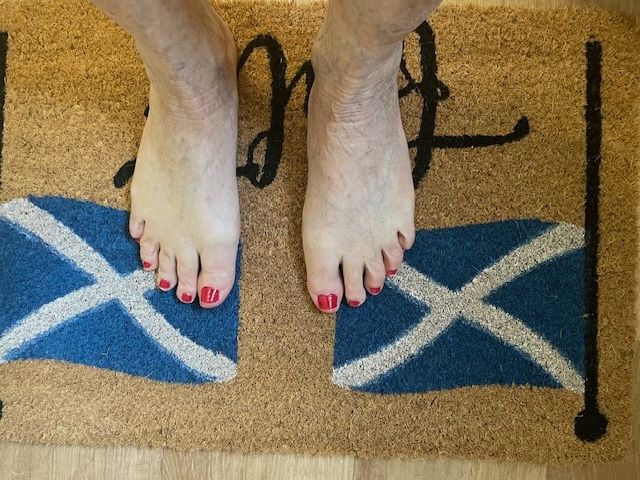
We’ve bought ourselves a classic coir mat for our bathroom, a nice one with a Scottish flag on it. I read somewhere that walking and standing on such a mat, or on textured surfaces might stimulate sensory input to the soles of your feet and that therefore, engaging in activities that stimulate sensory receptors, such as walking on varied textures, might contribute to maintaining sensory awareness. Some research suggests that textured surfaces—such as insoles—can enhance sensory feedback and balance in individuals with sensory impairments, like those with diabetic neuropathy*.
As we age, our senses become less strong, which makes it more difficult to notice details. Maybe you already reached an age where you might have noticed that your hearing and/or vision are less sharp, but you also might have noticed that’s the same for senses like taste, smell and touch.
How do our senses work?
Our senses—like hearing, sight, smell, taste, and touch—take in information from the world around us. This information is turned into signals that travel to our brain, where they are processed into recognisable experiences.
What Is a Sensory Threshold?
For us to perceive a sensation, a minimum level of stimulation is required. This is known as the sensory threshold. As we age, this threshold changes. If a stimulus is too weak, we may not notice it at all. For example, a faint scent may go undetected until it becomes stronger, the reason why having smoke detectors installed is even more important for elderly people.
How Aging Affects Our Sensory Thresholds
When our sensory thresholds tend to change we may require stronger stimuli to perceive sensations as clearly as before. Some common changes include:
- Hearing Loss: Higher thresholds for detecting sound, making it harder to hear soft voices or high-pitched tones.
- Vision Decline: Reduced ability to see fine details or distinguish colours.
- Weakened Sense of Smell and Taste: Food may seem less flavourful due to a higher threshold for detecting scents and tastes.
- Changes in Touch Sensitivity: Less sensitivity to temperature changes or pain, increasing the risk of unnoticed injuries.
Why Understanding Sensory Changes Matters
We are using our senses to understand the world and to communicate with the world, which is necessary to keep ourselves engaged with the world we live in.
Therefore recognising these changes is crucial for improving quality of life. By understanding how aging affects sensory perception, we can take steps to adapt. This might include using assistive devices, adjusting lighting, or incorporating stronger flavours into meals. Also training our senses could be helpful.
Tips to Maintain Sensory Health
While some sensory decline is natural with age, there are ways to support sensory health:
- Protect Your Hearing: Avoid loud noises and use ear protection when needed. We can use apps to train our hearing and use assistive devices if needed.
- Keep Your Eyes Healthy: Get regular eye exams and wear appropriate eyewear.
- Enhance Flavour in Food: Use herbs and spices to compensate for a weaker sense of taste.
- Train your senses: Use apps to train your hearing, do eye exercises to train/ improve your vision, stimulate the senses of your feet by doing foot exercises and stimulate the nerve endings by standing on a surface like a coir mat.
- Stay Active: Physical activity can improve circulation and nerve function, supporting overall sensory health. And this is so great about (mindful) yoga and TRE, tension and trauma releasing exercises, together they contribute to developing awareness about changes in our body, they teach how to soften the body, but they also offer ways to stimulate our energy and especially (mindful) yoga works with every part of our body, whether this is a larger muscle group, the eyes or tiny joints; they all deserve and get their attention.
Studies have shown that: “Age-related sensory decline impacts cognitive performance and exposes individuals to a greater risk of cognitive decline”.*
Keeping that in mind, my husband and I started stimulating sensations in our feet by using our coir mat. Every morning we stand with bare feet on our mat and brush our teeth, At the same time we practise our balance by standing on one foot and then change side and we end with standing on our toes. I realise that I don't always respond when my husband asks me or tells me something, and although I had some resentment, I will book a hearing test shortly and I will book an eye test as well.
Please sign up for my monthly Newsletter if you want to know more about what I have to offer.
Final Thoughts
Sensory perception plays a vital role in daily life. Understanding how it changes with age allows us to make adjustments and maintain a high quality of life. By staying proactive, we can continue to engage with the world in meaningful ways.
*Immediate effect of textured insoles on the balance in patients with diabetic neuropathy
Seyed Javad Alaee 1, Kourosh Barati 2,✉, Behnam Hajiaghaei 3, Banafshe Ghomian 4, Sedigheh Moradi 5, Marziyeh Poorpirali
*Multisensory integration precision is associated with better cognitive performance over time in older adults: A large-scale exploratory study
Rebecca J Hirst 1 2, Annalisa Setti 2 3, Céline De Looze 2, Rose Anne Kenny 2 4, Fiona N Newell 1
Mary Mac Gillavry | MAR 30, 2025
Share this blog post

Yoga & TRE for Joyful Aging
CONTACT
© 2026 Yoga & TRE for Joyful Aging