
Why is good posture so important, especially when we're getting older?
Mary Mac Gillavry | FEB 28, 2025
good posture
importance of good posture
why we loose height during aging
how much height do we loose during aging
misalignment
aches and pains
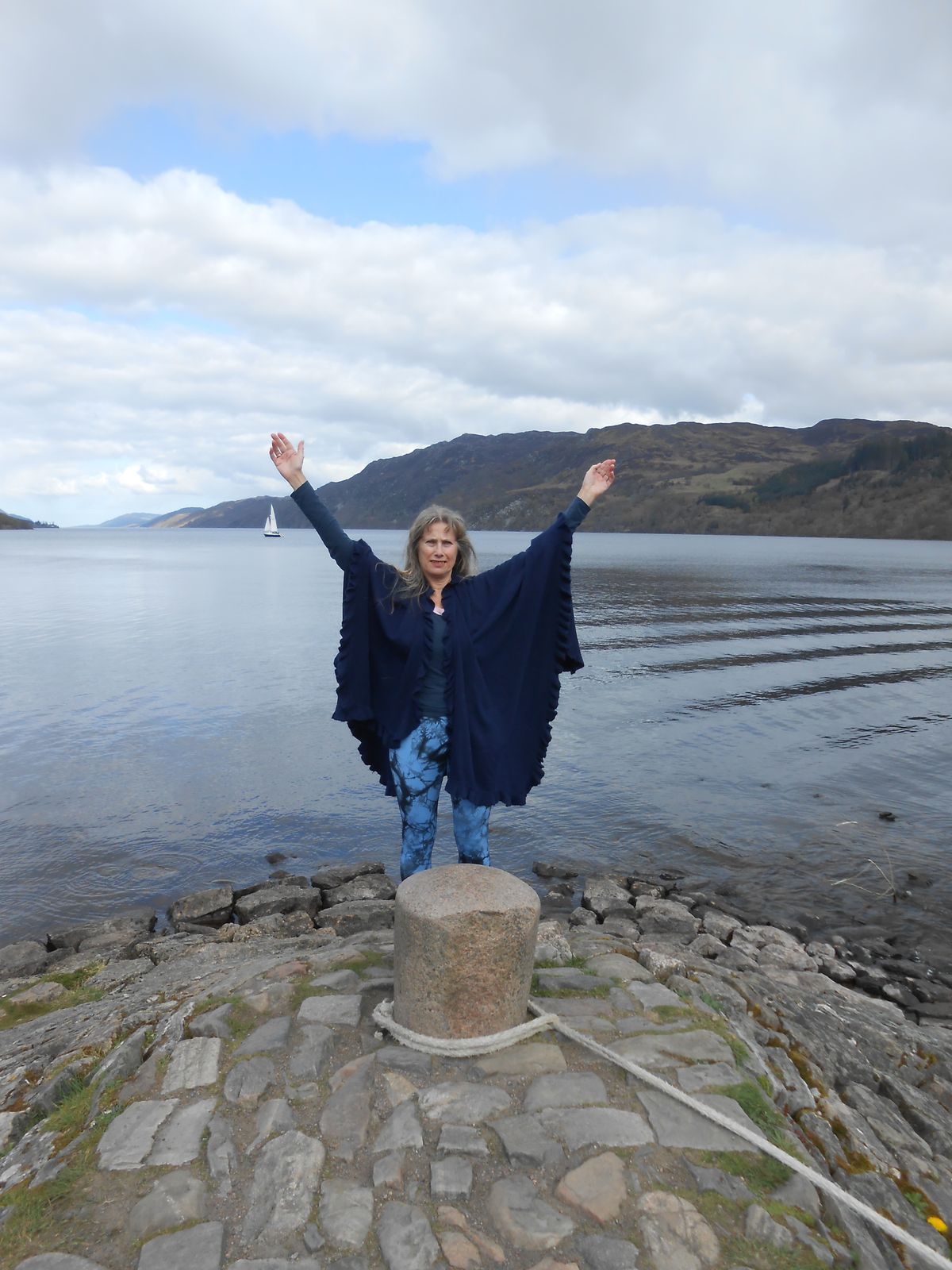
The importance of maintaining good posture during our aging journey?
A few months ago, I celebrated my 74th birthday. I'm gradually starting to notice that when I wake up in the morning and I’m heading to the shower, I feel some aches and pains, and maybe some of you are experiencing the same. It feels like losing height affects my spine, and lifting from the torso seems to become more difficult.
I remember I received a message from one of our members a few months ago. She wrote that until some time ago she was doing fine, but by reaching this age, she experienced all kinds of aches and pains and that her body wasn’t responding as it always did. Now I’m noticing these things are happening to me as well. Almost every day I practise yoga, I walk with Lexi (our dog) and during the day I’m always busy doing things in and around the house. Even though I'm a yoga teacher I wasn’t prepared to experience these kind of issues and I started to explore how I could adjust my own practise and my teaching to help myself and others to keep the body strong and healthy.
What's happening in our bodies when we're getting older?
So what is happening when we’re getting older? First of all, we lose height. There are two reasons for this.
1: As we age the disks between our vertebrae, whose function is to absorb shocks and keep the spine healthy and flexible, lose moisture and become dryer. As a result, their cushioning becomes less and they lose their shock-absorbing function.
2. The dryer disks change shape, they become thinner and flatter and become more susceptible for injury. The ancient yogi saying: “You’re as old as your spine flexible?” holds truth, but also encourages us to nourish our spine and to take care of it.
What are the main changes we meet in our aging journey and what are the best practises?
* Moving our spine in various ways stimulates the production of synovial fluid, which keeps our joints lubricated and hydrates the joint’s cartilage, but please avoid back bands when you have spinal injuries, osteoporosis, kyphosis, if you are fragile or having other issues. In these cases always consult your health care provider.
Another important change to notice is that from the age of 45, we gradually lose muscle mass (sarcopenia) and we start to notice more and more the effects on our posture. We lose strength and our bodies have to work harder to hold up against gravity. Women have generally fewer muscles than men and will therefore experience these effects more than men. The muscles responsible for holding our posture, our inner core muscles and the back extensor muscles, become weaker with the progression of muscle loss. Without a strong core to help support the spine, we put extra load on our spinal vertebrae and the muscles of the back. Training our inner core muscles and our back muscles are essential for maintaining good posture and so our back and spinal cord play a key role in our overall health. The structure of the spine is designed in a way to resist the pull of gravity most efficiently. There should be a sense of weightlessness like you see in African women carrying a big heavy water jar on their head, seemingly without any effort.
* Knowing how to train your core muscles, especially the inner core muscles, as well as training our back muscles is essential for maintaining good posture. Many of us hate doing sit-ups and crushes and actually, they are not very helpful for a balanced core practice, because they only work a part of our abdominals. Also a lot of pressure is put on the intra-abdominal muscles, which could lead to or worsen prolapse symptoms. A core stabilising practice would be more sufficient for maintaining good posture.
Our fascia are drying out and we need to move to get our facia hydrated. Different types of movement are essential to get the water into the different tissues in our body.
* This means avoiding doing the same movements over and over again, but find variations and include unexpected movements as well as rest. Heavy exercises are driving the water out of the tissues and therefore should be varied with rest in between the exercises to allow the tissues to suck up the water again before we do the next exercise.
It is very important that we become aware how things are/or are changing in our body. What do we notice? The majority of us do understand that we have to move and do muscle strengthening exercises, but what also is important is to vary the strengthening exercises with stretching exercises, because strengthening exercises without stretching will make that part of muscles too tight.
There are many more things that contribute to our aches and pains and one of them is a habit that we might have created during the years and has led us to misalignment like hunching forward while sitting at a computer, hanging in our chair, hanging on one hip while standing in a queue etc. Did you know that our head weighs 10-12 lbs and every inch we move our head forward, the extra weight of our head on our spine and neck can increase by 10 pounds. No wonder this can lead to upper back and neck problems.
* Correct your misalignments, they can be addressed, but it does need effort and motivation to change these habits. Remember that it's never too late to make improvements, but the earlier you start, the better!
Mary Mac Gillavry | FEB 28, 2025
Share this blog post

Yoga & TRE for Joyful Aging
CONTACT
© 2026 Yoga & TRE for Joyful Aging