
How I’m Returning to Yoga in Stressful Times (And How You Can Too)
Mary Mac Gillavry | MAY 2, 2025
yoga for stress relief
how to get back on the yoga mat
coping with stress through yoga and tre
overcoming resistance to practise yoga
yoga during uncertain times
chronic stress and yoga
yoga and the vagus nerve
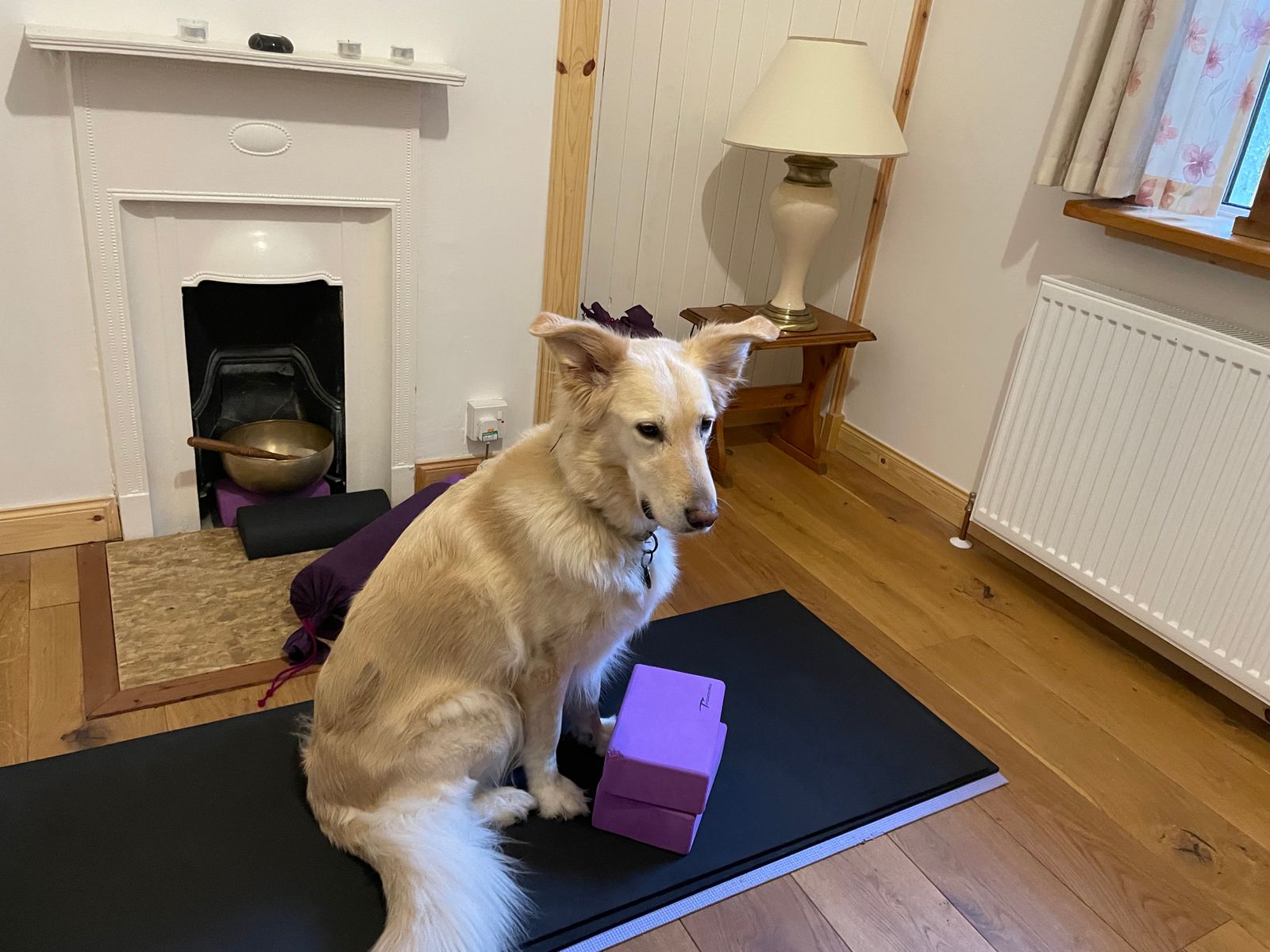
I find it difficult to get on my yoga mat in these uncertain times. The news sends out a lot of worrying messages, and I would have expected a desire to get on my mat and process my feelings of unease—but strangely enough, even though I set my intention daily, I still find all sorts of “important” things to do.
I do manage to squeeze in some short practices during the week, but there’s no consistency.
In my private life, I’ve also encountered a lot of stress because our dog Lexi has been diagnosed with an incurable disease. This has added to my rising stress hormone levels, so a bit of practice would certainly do me good.
What Stress Does to Your Body
We all experience some level of stress in our lives. Even simple things, like going to the dentist, can activate the sympathetic nervous system—raising our stress hormones to prepare the body for fight or flight.
But stress is meant to be temporary. Once the stressor is gone, our hormone levels should return to normal, and the parasympathetic nervous system should help the body relax and rebalance.
The problem arises when stress lingers. When we’re under constant pressure or dealing with overwhelming situations, we may adapt to a heightened stress level as our “new normal”—which can have serious effects on the body.
This phenomenon was defined in 1993 by neuroscientist Bruce McEwen and psychological psychologist Eliot Stellar as allostatic load—a term used to describe the cumulative toll of chronic stress on the body.
How Chronic and Collective Stress Impact Your Health
Our allocated stress load reflects how much stress we’re carrying around. When personal stress combines with collective stress—the stress we feel in response to world events—it can push our nervous system deeper into the fight-or-flight state.
We unconsciously contract muscles like the psoas, shoulders, and neck, forehead etc. under stress. Chronic stress also affects the vagus nerve, which facilitates communication between the brain and body. When this nerve is impacted, our gut health suffers, and our emotional regulation becomes more difficult.
Are You Living in a Fight-or-Flight State?
I often catch myself constantly doing things and running around just to stay busy—which is a clear sign I’m in a fight-or-flight state.
If you find yourself:
- Always on the go
- Constantly checking your phone
- Drinking more alcohol than usual
- Distracted or disconnected
...you may also be living in a prolonged stress response.
Small Steps Toward Rebalancing
To counter this, I’ve started taking small, intentional steps to help rewire my brain and return to a more balanced state.
Instead of distracting myself with unhealthy behaviours, I’ve committed to two short daily practices:
- Five minutes of meditation
- A few mindful movements on the mat
Just those few minutes make a difference. I’ve noticed that as soon as I’m on the mat, I begin to yawn—a sign that my body is activating its relaxation response. It feels like a reset.
Practices like yoga, breathwork, meditation, mindfulness, and TRE have become a lifeline for me.
Practice With Me: Free Yoga class and Discovery Call
Are you ready to feel more grounded and supported?
Then Book your free yoga session or a 20-minute discovery call to explore what you need and how I can support you.
Mary Mac Gillavry | MAY 2, 2025
Share this blog post

Yoga & TRE for Joyful Aging
CONTACT
© 2026 Yoga & TRE for Joyful Aging